

Preparing for a new puppy starts long before collection day. The right setup makes those first few days calmer, safer and much less overwhelming for everyone. 🐶💕
I’ve wasted plenty of money over the years on dog training equipment, collars, harnesses, leads, chews, toys and “puppy essentials” that turned out to be anything but essential. Some products looked great online, then lasted five minutes. Others sounded helpful, but made life harder.
So this guide is designed to save you time, money and stress. These are the practical puppy preparation tips and products I recommend to my own puppy clients before their puppy comes home.
The aim is simple: get the environment right from day one, prevent common problems before they begin, and give your puppy the calmest possible start.
Quick Puppy Preparation Checklist
Before bringing your puppy home, make sure you have:
- A safe puppy area near easy garden access
- A secure garden or toileting area
- A spending pen for supervised toilet trips
- Baby gates for stairs, doorways and unsafe areas
- Non-slip VetBed or washable bedding
- A non-drip water bowl
- A slow feeder or simple interactive feeder
- Digital scales for weighing meals accurately
- Safe chews, toys and puppy-appropriate enrichment
- A safe car travel setup
- Products ready for unsettled tummies
- A plan for the first few nights
- Family rules agreed before puppy arrives
This guide will walk you through each of those areas, without sending you down a rabbit hole of training advice before your puppy has even arrived.
Why Preparing for a New Puppy Matters
Most puppy problems are easier to prevent than fix later.
Toilet accidents, chewing, biting, poor sleep, unsettled nights, scavenging in the garden, children winding the puppy up, visitors overwhelming them and car sickness are all much harder when the environment is not ready.
This is why I put so much emphasis on preparation. The first few weeks are not about perfect training. They are about management, safety, calm routines and having the right tools ready before you need them.
Getting the setup right early makes everything easier. It gives your puppy fewer chances to practise habits you do not want, and gives you fewer moments where you find yourself saying, “Why did I leave that there?” while wrestling a sock, tea towel or remote control out of a tiny shark’s mouth.
If you are still at the stage of choosing a puppy, I strongly recommend reading How to Choose the Right Dog: Breed, Breeder and Puppy and Working vs Show Dogs: Choosing the Right Puppy. The right puppy for your household makes preparation much easier.
Preparing Your Home and Garden for a New Puppy
Work out where your puppy will primarily spend their time. Ideally, this should be within easy access to the back door for frequent toilet breaks.
Avoid giving your puppy full access to the whole house straight away. Too much freedom too soon usually leads to accidents, chewing, scavenging and frantic “where’s the puppy?” moments.
A safe puppy area should be:
- Easy to clean
- Close to the garden or toileting area
- Free from cables, rugs and chewable clutter
- Close enough that your puppy can still see and hear you
- Simple to supervise
- Comfortable enough for resting and sleeping
A kitchen, utility room or gated section of a living space often works well. You want your puppy to feel included, but not have the freedom to quietly redecorate your house using teeth and enthusiasm.
Avoid puppy pads where possible. Most puppies like to chew them, and they can accidentally teach your puppy that toileting indoors is part of the plan. From the start, we want to make outside toileting as clear and consistent as possible.
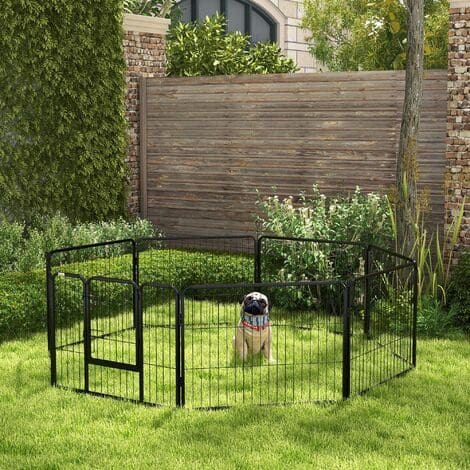
Have a spending pen by the back door as a safe space for toilet trips. This helps your puppy learn where to toilet without running riot through the garden and ingesting half your plants, soil and anything else they can find.
It also helps keep young puppies safer before they are fully vaccinated, depending on your garden setup.
Ensure your garden is fully secure. You would be surprised what tiny cracks puppies can squeeze through. Check fencing, gates, gaps under panels, side access and anything they could climb, chew or dig around.
It is also worth checking your garden for plants and household items that may be toxic to dogs. Dogs Trust has a helpful guide to toxic items for dogs, and I’ve also created a list of common things around the house that are poisonous to dogs.
Before your puppy arrives, walk around the house and garden at puppy height. If it can be chewed, swallowed, pulled over, climbed into, knocked down, shredded or proudly paraded around the kitchen, assume your puppy will try.
Do Puppies Need a Crate?
Crates are often presented as an essential puppy item, but I do not believe every puppy needs one in the house.
Growing up in the 80s, barely anyone I knew used crates. Dogs had a bed in the kitchen, utility room or another safe space, often with a baby gate across the doorway, and everyone survived. Shocking, I know.
That does not mean crates are always bad. They can be useful for safe car travel, veterinary recovery, or dogs who genuinely feel settled in them when introduced carefully. But they are not magic boxes. If a puppy is distressed inside one, the crate has not solved the problem. It has just contained it.
Some countries also place restrictions on routine crate confinement, which is a useful reminder that crates are not the only way to raise a puppy. In Finland, for example, guidance around animal welfare states that dogs may only be kept in a cage for transport, illness or another temporary acceptable reason.
Personally, I prefer a well puppy-proofed kitchen, utility room or safe area with a baby gate, comfy bedding, water, appropriate chews and nearby company. It gives the puppy more choice, more space, and often feels kinder and more practical for everyday home life.
If you do choose to use a crate, make sure it is introduced gradually, positively and never used as a place to leave a distressed puppy to cry it out.
Setting Up Your Puppy’s Sleeping Area
Your puppy’s sleeping area should feel safe, cosy and easy to clean.
Use a large pen or gated area where they can sleep, eat, potter about and generally look adorable while you wonder how something so small has taken over your entire life.
You want to sleep near them for at least the first 2 to 7 nights, then gradually move further away once they are settling. Remember, your puppy has just left their mum, littermates and everything familiar. They do not need a tough love life lesson on night one.

Use non-slip VetBed for their sleeping area. It is comfy, washable and practical, which is exactly what you need when raising a puppy.
Always provide access to fresh water in a non-drip bowl. Never take water away overnight to avoid toilet trips. That is not fair on the puppy and can be risky, especially when they are young.
For first-night comfort, you may wish to use a heat pad under the bed before night time, leave a radio on quietly nearby, use a ticking clock, or add a Snuggle Puppy.
The Snuggle Puppy is one of those products I often recommend because it can help recreate some of the warmth and heartbeat sensation puppies are used to from their littermates.

You can also spray the bed with Pet Remedy and install a few ADAPTIL plug-ins nearby. These are not magic wands, but they can be a helpful part of a calm, predictable first-night setup.
Puppy-Proofing Your House
Puppy-proof the house, then when you think you have finished, do it again.
You will be amazed what puppies can reach, chew, ingest, shred or turn into a very exciting game of “catch me if you can”.
Common puppy targets include:
- TV remotes
- Glasses
- Shoes and slippers
- Mobile phones
- Cables and chargers
- Ornaments
- Rugs
- Plants
- Socks and underwear
- Tea towels
- Bins
- Children’s toys
- Anything that looked boring until your puppy made it valuable

Make sure all bins have secure lids. Puppies do not need open access to food waste, wrappers, tissues or anything they can proudly scatter across the floor while you briefly dared to make a cup of tea.
Floors and surfaces should be as bare as possible at first. Cables should be tucked away or placed in trunking. Shoes and slippers should go in cupboards. Baby gate any area you do not want your puppy to access.

Any steps or stairs should be baby gated, especially in the early weeks. Puppies can be clumsy, fast and wildly overconfident, which is not always a great combination.


Setting the environment up for success is half the battle. If your puppy cannot access the wrong thing, they cannot practise the wrong habit. That is not cheating. That is sensible puppy raising.
What I Recommend to Every Puppy Client
Having the right tools for the right job makes puppy life much easier.
These are the sorts of products I recommend because they are practical, useful and genuinely helpful during the early weeks. I have wasted money on plenty of dog products over the years so you do not have to.
My go-to puppy essentials include:
- Spending pen for safe toileting and garden trips
- Non-slip VetBed for washable bedding
- Road Refresher non-drip bowl for fresh water
- Heat pad for first-night comfort
- Snuggle Puppy for settling support
- Pet Remedy Spray for the sleeping area and car
- ADAPTIL plug-ins for the home
- Digital scales for accurate feeding
- My Pup’s First Slow Feeder for calmer mealtimes
- Oralade for hydration support after collection
- Protexin Synbiotic for delicate puppy tummies
- Pro-Kolin in case of diarrhoea
- Travel crate for safe car journeys
- Doggie Language book for families with children
You do not need to buy every dog product on the internet. You need a few carefully chosen items that make puppy life easier, safer and calmer.
Chewing, Toys and Puppy Enrichment
Puppies need to chew. Chewing is not bad behaviour. It is normal, necessary and one of the main ways puppies explore the world.
Your job is to make the right things easy to access and the wrong things boring, unavailable or behind a cupboard door.
Stock up on good quality natural chews and suitable puppy toys before your puppy arrives.

I would highly recommend a bag of Pizzle Sticks, the Tug-E-Nuff Chaser Toy and the Kong Knotz Teddy.
The Tug-E-Nuff Chaser Toy is especially useful because it gives puppies an appropriate outlet for chasing, grabbing and tugging. That is far better than them discovering your dressing gown cord, trouser legs or the tea towel hanging from the oven door.
Good preparation does not mean stopping normal puppy behaviour. It means giving that behaviour somewhere appropriate to go.
Food Routines for Your New Puppy
Do not worry too much about changing food straight away. Use whatever your breeder supplies you with for the first week or so. Your puppy is already going through a huge transition, so this is not the time to make everything different at once.
On the back of the packet, it should state the amount you should feed for your puppy’s age and expected adult size. Use digital scales to weigh this out accurately for each meal. Avoid using cups, because they are surprisingly inaccurate.
Puppies between 8 and 12 weeks old are usually on four meals a day, roughly spread around four hours apart:
- 08:00
- 12:00
- 16:00
- 20:00

Try to use a basic interactive feeder rather than a standard bowl. This helps slow the feeding process and gives your puppy a simple, appropriate task. My Pup’s First Slow Feeder is ideal for this.

When you are ready to look into a good quality diet, give it some research and take your time. You can also read my article on choosing dog food.
Avoid using lots of rich treats in the first few days. Use part of their daily food allowance to reward simple things like toileting outside. Save higher-value food for later training when your puppy is more settled and their tummy is coping well.
Preparing Children and Family Before Puppy Arrives
If there are children in the household, preparation needs to happen before the puppy comes home.
Puppies nip. They jump. They chase dressing gowns. They grab sleeves. They get over-excited quickly. Children often get excited too, which can turn the whole thing into a tiny furry circus.
Children should be taught to stay calm, keep voices low, avoid rough handling, and understand that puppies are not toys. They should not pick the puppy up, take things away from them, disturb them when sleeping, or stroke them roughly on the head.

If you have children, I highly recommend the Doggie Language book. It is a brilliant way to help children and adults understand what dogs are communicating through body language.
All play and interaction should be supervised and kept low key. If the puppy starts getting mouthy or over-excited, that is usually information. They may need calm, rest, a chew, or less chaos around them.

Families often underestimate how much preparation helps children and puppies settle more smoothly together. This is something I may touch on during puppy consultations where relevant, especially if there are young children in the home.
Car Journey: Bringing Your Puppy Home Safely
When the day finally comes and you collect your puppy, make sure you have planned the car journey properly.
Call the breeder in the morning and ask them not to feed your puppy for at least a few hours before collection. Otherwise, breakfast may make a dramatic reappearance on the way home. Been there, done that.
Before you set off, spray some Pet Remedy in the car, stick something calming on the radio, and make sure you have a travel crate on the back seat, ideally with a passenger nearby.

The Highway Code states that dogs and other animals should be suitably restrained in vehicles so they cannot distract the driver or injure themselves or others if the car stops quickly.
Usually, I prefer dogs travelling securely in the boot area when they are older, but for a tiny puppy’s first journey, having them nearby in a secure travel crate can feel more reassuring.
You can also read my full guide to Dog Car Travel Safety if you want more detail on safe setups.
Arrival Day: The First Hours With Your New Puppy
When you arrive home, do not bring your puppy in and immediately pass them around the family like a tiny celebrity.
Keep it calm. Take them straight to the toileting area or spending pen and give them a chance to toilet. The key is to keep moving gently around the outskirts, as movement can help encourage spending.

Along with fresh water, I often recommend 50ml of Oralade every hour until bedtime on collection day. This can help support hydration and settle their tummy after the journey and stress of the transition.
Wait an hour or two before feeding to give their tummy time to settle. Keep everything calm while your puppy adjusts to their new surroundings.

It is common for puppies to be loose for the first few days after moving home, so it is sensible to have a pack of Protexin Synbiotic ready. This is a prebiotic and probiotic that can support the gut.
It is also handy to keep a tube of Pro-Kolin ready in case they develop diarrhoea.
Someone should be home with your puppy at all times for the first few weeks. If you have holidays, building work, major life events or full days out planned, reconsider your collection date. Timing matters.
Things Most New Puppy Owners Forget
Most owners remember the bed, bowl and cute toy. The things they forget are usually the things that make the biggest difference.
- Too much freedom creates problems. Start small and expand access gradually.
- Visitors can be overwhelming. Your puppy does not need a welcome party on day one.
- Children need preparation too. Calm rules help everyone.
- Cheap products often cost more long term. Buy once where you can.
- The garden needs checking. Gaps, plants, soil, stones and steps all matter.
- Car travel needs planning. Safe restraint is important from the first journey.
- Tummies can be delicate. Have hydration and gut support ready.
- First nights are emotional. Your puppy needs reassurance, not isolation.
This is the sort of preparation that saves stress later. The right setup does not guarantee a perfect puppy, because puppies are puppies, but it gives you a much better starting point.
Preparing for a New Puppy: Shopping Checklist
Here is a practical puppy shopping checklist you can work through before bringing your puppy home:
- Spending pen by the back door
- Non-slip VetBed for sleeping areas
- Non-drip water bowl
- Heat pad
- Snuggle Puppy
- Pet Remedy Spray
- ADAPTIL plug-ins
- Natural chews
- Pizzle Sticks
- Tug-E-Nuff Chaser Toy
- Kong Knotz Teddy
- Digital scales
- My Pup’s First Slow Feeder
- Oralade
- Protexin Synbiotic
- Pro-Kolin
- Travel crate
- Doggie Language book
You do not need endless gadgets. You need the right essentials, chosen for a reason.
Need Help Before Your Puppy Arrives?
This guide gives you the preparation essentials, but it is not meant to replace personalised support.
Every puppy, home, family and routine is different. Some owners need help planning their setup. Others want to prepare for sleep, toileting, mouthing, children, feeding routines, car travel or choosing the right products before collection day.
That is exactly where a Perfect Puppy Phone Consultation can help.
If you are local, the Perfect Puppy Package is the best way to get support from the beginning, including local classes where suitable. If you are further away, the Perfect Puppy Online Course gives you structured puppy guidance you can follow from home.
The first few weeks shape a huge amount of your puppy’s future behaviour. Getting professional guidance early is often much easier than trying to fix problems once they have already become habits.
FAQ
When should I start preparing for a new puppy?
Ideally, start preparing a few weeks before your puppy comes home. This gives you time to puppy-proof the house, check the garden, order essential products, speak to your breeder, contact your vet and plan the first few nights without a last-minute panic.
What do I need before bringing a puppy home?
Before bringing a puppy home, prepare a safe sleeping area, a toileting plan, a secure garden or spending pen, food and water setup, washable bedding, safe chews, toys, travel restraint, gut support products and clear family rules.
Do I need a crate for a new puppy?
Not always. Crates can be useful for travel or some carefully introduced setups, but they are not essential for every puppy. A puppy-proofed kitchen, utility room or safe area with a baby gate, comfy bedding, water and appropriate chews can work beautifully for many families.
Should I use puppy pads?
I generally avoid puppy pads because many puppies chew them and they can teach puppies that toileting indoors is expected. From the start, it is usually clearer to build a routine around going outside in a safe, supervised toileting area.
How long should someone stay at home with a new puppy?
Ideally, someone should be home with the puppy full-time for the first few weeks. Young puppies need support with toileting, settling, sleep, feeding, supervision and gradually learning that short periods of separation are safe.
What should I buy for my puppy’s first night?
For the first night, I recommend washable bedding, a safe puppy area or pen, fresh water in a non-drip bowl, a heat pad, a Snuggle Puppy, and calming support such as Pet Remedy or ADAPTIL. You should also plan to sleep nearby for the first few nights.
Products:


